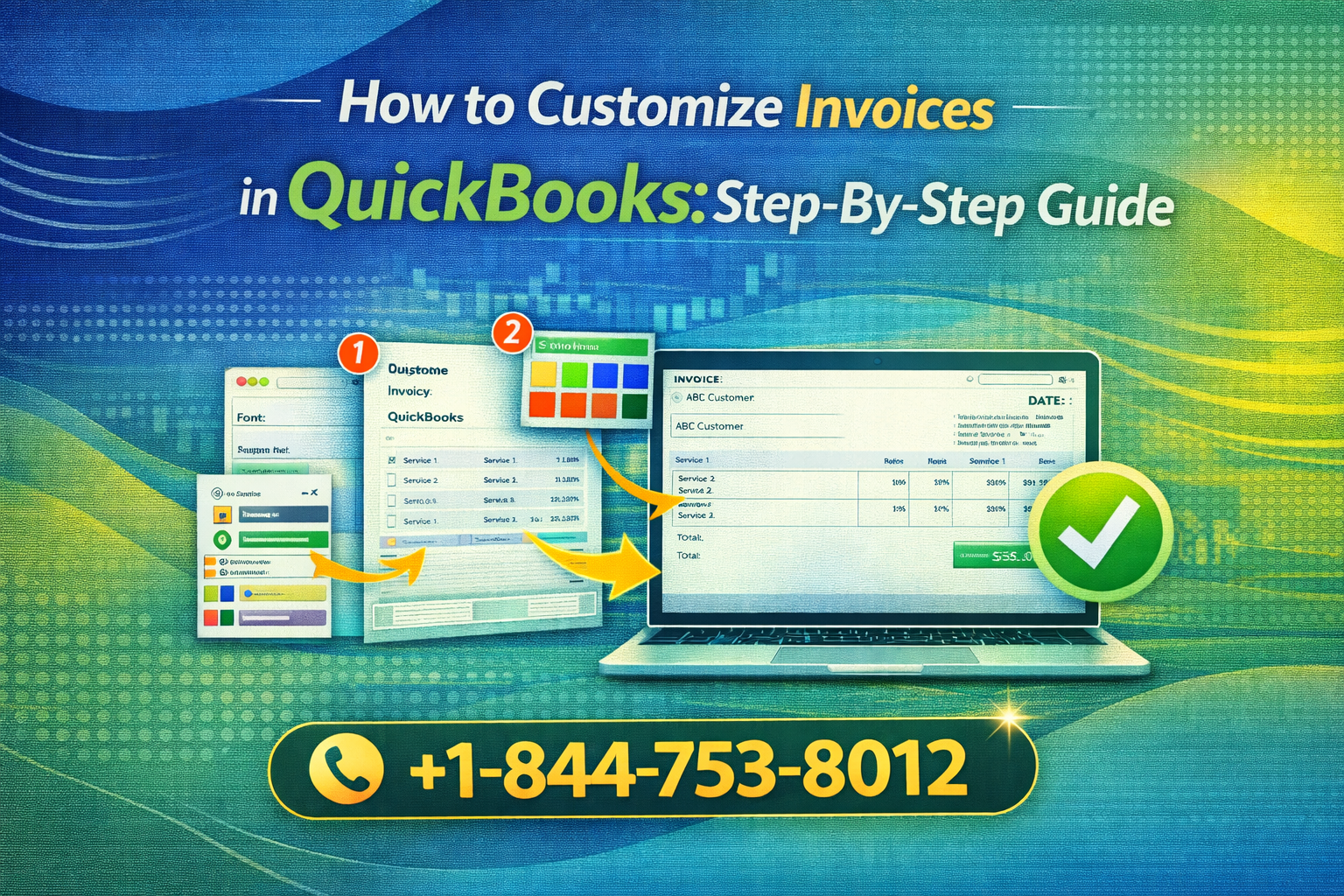
Creating professional invoices is a crucial part of running a business. Invoices not only ensure timely payment but also reflect your brand’s identity. With QuickBooks, you can create invoices that are not only accurate but also fully customized to match your business style. This guide will walk you through how to customize QuickBooks invoices step-by-step, whether you want to add your logo, adjust layouts, or personalize the format for your clients.
For expert help on invoice customization, call us at 844-753-8012 and get your QuickBooks invoices set up exactly the way you want.
Why Invoice Customization Matters
Invoices are more than just billing documents—they’re a reflection of your business professionalism. Customizing invoices in QuickBooks helps you:
- Strengthen brand identity: Add logos, brand colors, and fonts.
- Improve clarity: Highlight key details like payment terms, discounts, and totals.
- Save time: Pre-designed templates reduce manual editing.
- Enhance professionalism: A personalized invoice builds trust with clients.
This makes invoice customization a crucial part of your accounting process. QuickBooks makes it easy to personalize invoices QuickBooks, ensuring you maintain a consistent and professional image.
Step 1: Sign in to QuickBooks
Before starting, make sure you are logged into your QuickBooks Online or QuickBooks Desktop account:
- Open QuickBooks Online or Desktop.
- Enter your login credentials.
- Navigate to your company file.
Pro Tip: Always backup your QuickBooks data before making significant changes like invoice customization.
Step 2: Access the Invoice Customization Tool
QuickBooks provides a built-in tool to modify invoice templates. Here’s how to access it:
QuickBooks Online:
- Click Settings (Gear Icon) in the upper-right corner.
- Select Custom Form Styles under “Your Company.”
- Click New Style → Invoice to create a new invoice template.
QuickBooks Desktop:
- Go to Lists → Templates.
- Select an invoice template and click Customize.
This is your starting point to customize invoices QuickBooks according to your business needs.
Step 3: Choose a Template
QuickBooks offers several pre-built invoice templates. When selecting a template:
- Choose a Simple template for a clean, minimal look.
- Use Modern or Professional templates for a more polished appearance.
- Remember, you can always modify colors, fonts, and layout later.
Tip: For a QuickBooks invoice template tutorial, start with a template closest to your preferred design—it reduces setup time.
Step 4: Add Your Business Branding
Personalizing invoices reinforces your brand identity. Here’s how to personalize invoices QuickBooks:
- Click Edit on your chosen template.
- Upload your company logo.
- Customize the color scheme to match your brand.
- Choose fonts that align with your company style.
Pro Tip: Keep the design professional and readable—avoid overly bright colors or tiny fonts.
Step 5: Customize the Layout
Adjusting the layout makes your invoices clear and easy for clients to read:
- Header: Include your business name, logo, address, and contact information.
- Body: Show line items, quantities, rates, and subtotals clearly.
- Footer: Add payment terms, notes, and thank-you messages.
QuickBooks lets you move, add, or remove fields so the invoice reflects the information your clients need most.
Step 6: Include Important Invoice Details
A well-customized invoice ensures clients have all the details they need to pay promptly. Include:
- Invoice number and date
- Payment due date
- Itemized list of products/services
- Tax information (if applicable)
- Payment methods accepted
This step is essential for QuickBooks invoice customization guide and ensures smooth transactions.
Step 7: Add Custom Fields
QuickBooks allows you to include custom fields for additional details:
- Click Custom Fields in your invoice template.
- Add fields such as “Project Name,” “PO Number,” or “Client ID.”
- Decide if the field is visible on the invoice or internal only.
Custom fields enhance tracking and reporting, making your invoices more functional.
Also Read: How to Activate QuickBooks Payments Service Quickly
Step 8: Set Default Payment Terms
Setting default payment terms improves cash flow management:
- Navigate to the Payment Terms section in your template.
- Choose terms like Net 15, Net 30, or custom durations.
- Save these defaults for every invoice automatically.
This ensures clients understand payment expectations upfront.
Step 9: Preview and Test Your Invoice
Before sending invoices to clients:
- Click Preview to see how the invoice will look.
- Check for:
- Logo clarity
- Correct tax rates
- Accurate totals
- Proper layout alignment
- Make adjustments as needed.
Tip: Send a test invoice to yourself or your team to confirm everything looks professional.
Step 10: Save Your Customized Invoice Template
- Give it a clear name (e.g., “Professional Invoice Template 2026”).
- Set it as the default template if you want all future invoices to use it.
- You can create multiple templates for different clients or services.
Once satisfied, save your template:
This step completes your QuickBooks invoice template tutorial and ensures consistency across all invoices.
Also Read: QuickBooks Online GL Accounts Won’t Stay Inactive? Fix It Fast
Step 11: Sending Customized Invoices
With your template ready, sending invoices is simple:
- Go to Sales → Invoices.
- Click New Invoice.
- Choose your customized template.
- Fill in client information, items, and totals.
- Click Send or Save for Later.
Pro Tip: You can also automate recurring invoices using your customized templates for regular clients.
Step 12: Track and Manage Invoices
QuickBooks Online provides tools to track payments and manage invoices efficiently:
- Open Invoices Report: See unpaid invoices at a glance.
- Aging Report: Identify overdue invoices.
- Payment reminders: Automate email reminders to clients.
Proper tracking ensures timely payments and reduces manual follow-ups.
Tips for Effective Invoice Customization
- Keep it simple: Avoid clutter to make the invoice readable.
- Be consistent: Use the same fonts, colors, and layout across all invoices.
- Highlight important info: Make totals and due dates stand out.
- Include terms and conditions: Clarifies expectations for clients.
- Regularly update templates: Reflect any branding changes or legal requirements.
Following these tips ensures your invoices are professional, clear, and effective.
Common Mistakes to Avoid
- Overloading invoices with too much information
- Forgetting to add tax details or custom fields
- Using inconsistent branding across invoices
- Not previewing before sending to clients
- Ignoring payment terms and due dates
By avoiding these mistakes, you maintain professionalism and improve client satisfaction.
Why Businesses Prefer Customized Invoices in QuickBooks
- Professionalism: Reflects brand image and credibility.
- Accuracy: Reduces calculation errors and ensures clarity.
- Efficiency: Saves time with pre-made templates and automation.
- Flexibility: Customize for specific clients, services, or projects.
Using QuickBooks invoice customization guide, businesses of all sizes can maintain consistency and professionalism while improving cash flow.
Expert Assistance for QuickBooks Invoice Customization
Customizing invoices can be straightforward, but for businesses with complex invoicing needs, professional guidance can save time and reduce errors. Our experts specialize in how to customize QuickBooks invoices, ensuring templates meet your business requirements.
Call 844-753-8012 to get your invoices personalized professionally and set up correctly for your QuickBooks account.
Conclusion
Mastering invoice customization in QuickBooks elevates your business’s professionalism and streamlines your billing process. By following this step-by-step guide, you can:
- Design professional invoices
- Add branding and custom fields
- Automate recurring billing
- Track payments efficiently
With QuickBooks, you can create invoices that not only look professional but also improve client satisfaction and cash flow management.
For help with customize invoices QuickBooks or a full setup, contact us at 844-753-8012 for personalized support.
Frequently Asked Questions
Yes! QuickBooks allows multiple templates for different clients, services, or branding purposes.
No. Once sent, the invoice cannot be changed. However, you can create a credit or replacement invoice.
Both versions allow customization, but QuickBooks Online offers a more intuitive drag-and-drop interface.
You can enable tax fields and discount fields in your invoice template for automatic calculations.