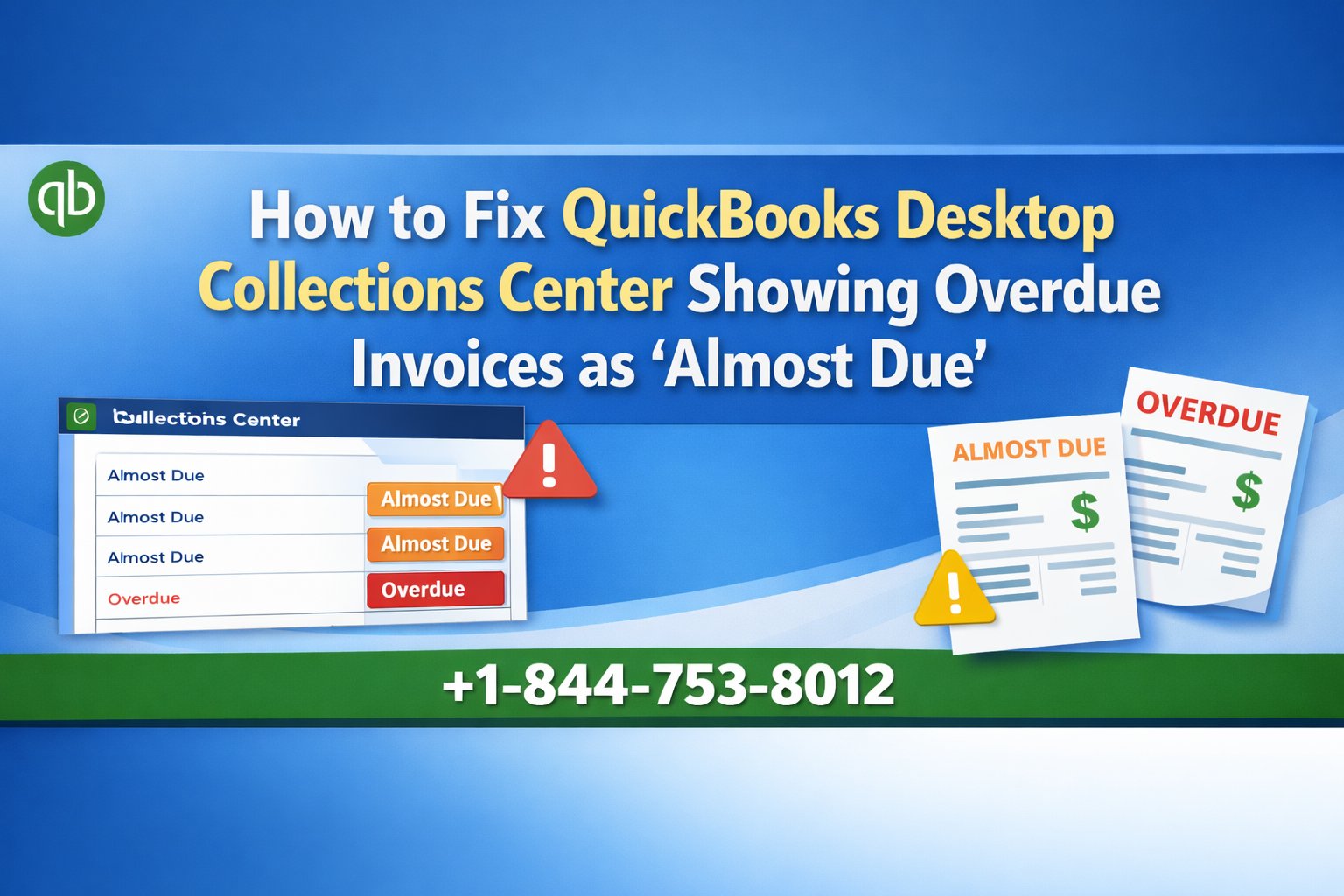
If you use QuickBooks Desktop, you may have noticed a frustrating issue: the Collections Center sometimes shows overdue invoices as “Almost Due.” This can create confusion, delay collections, and distort your accounts receivable reports. Understanding the root cause and applying the correct fix ensures that your aging reports and collections efforts remain accurate.
In this comprehensive guide, we’ll explore the reasons behind QBD overdue invoice display problems, walk through a QuickBooks Desktop Collections Center fix, and provide step-by-step guidance on troubleshooting QuickBooks Desktop invoice aging issues.
For expert support in resolving any QuickBooks Collections Center troubleshooting needs, call 844-753-8012.
Understanding the QuickBooks Desktop Collections Center
The Collections Center in QuickBooks Desktop is designed to help businesses manage outstanding invoices efficiently. It categorizes invoices into aging buckets such as:
- Current
- Almost Due
- 1–30 Days Past Due
- 31–60 Days Past Due
- 61–90 Days Past Due
- Over 90 Days Past Due
QuickBooks determines which bucket an invoice belongs to using the invoice due date and the report date (usually today’s date). If something goes wrong—like incorrect due dates or system glitches—overdue invoices may appear as “Almost Due”, causing a QBD overdue invoice display problem.
Also Read: How to Handle Credit Card Deposits in QuickBooks Online Without Double Counting
Common Causes of Overdue Invoices Showing as ‘Almost Due’
There are several reasons why your overdue invoices might not appear correctly:
1. Incorrect Invoice Due Dates
If invoices were created with wrong due dates, QuickBooks will misclassify them.
2. Wrong Default Terms
Default terms like Net 30, Net 15, or Due on Receipt may not match your actual billing practices, causing aging errors.
3. System Date or Report Date Mismatch
If your computer or QuickBooks report date is off, overdue invoices may still display as “Almost Due.”
4. Aging Report Settings
Custom aging intervals in Reports & Graphs preferences may misalign how invoices are categorized.
5. Data File Issues
Minor data corruption or glitches in your QuickBooks company file can result in incorrect invoice aging display.
How QuickBooks Calculates Invoice Aging
QuickBooks uses a simple formula for aging:
Invoice Aging = Report Date − Invoice Due Date
- Less than 0 → Current
- 0 or within threshold → Almost Due
- Greater than 0 → Past Due
If the aging thresholds or due dates are incorrect, invoices may appear in the wrong bucket.
Step-by-Step QuickBooks Desktop Collections Center Fix
Follow these steps to resolve overdue invoices showing almost due QBD:
Step 1: Verify System and Report Dates
- Ensure your computer’s date is correct.
- In QuickBooks Desktop, go to Reports > Customers & Receivables > Collections Report and verify the “As of” date.
Incorrect system or report dates can make invoices appear “Almost Due” when they are overdue.
Also Read: How to Fix QuickBooks Enterprise Crashing When Applying Customer Credits to Invoices
Step 2: Check Default Invoice Terms
- Go to Edit > Preferences > Sales & Customers > Company Preferences.
- Review the Default Terms.
- Correct them to match your billing cycle (e.g., Net 30).
Proper default terms prevent misclassification of overdue invoices.
Step 3: Correct Individual Invoice Due Dates
- Open the invoice.
- Review the Due Date field.
- Correct any errors.
- Save the invoice.
This ensures that QuickBooks correctly calculates aging.
Tip: For multiple invoices, consider using the Batch Enter Transactions feature or reach out to our team at 844-753-8012 for assistance.
Step 4: Rebuild Your QuickBooks Data File
Data corruption can cause QuickBooks Desktop invoice aging issues.
- Close QuickBooks.
- Open QuickBooks Tool Hub (download from Intuit).
- Select Company File Issues.
- Click Verify Data.
- If issues are found, run Rebuild Data.
Rebuilding your file often resolves aging misclassifications.
Step 5: Adjust Aging Report Preferences
- Go to Edit > Preferences > Reports & Graphs > Company Preferences.
- Adjust the aging intervals if needed.
This ensures invoices appear in the correct aging bucket.
Step 6: Refresh QuickBooks Desktop
- Close and reopen QuickBooks Desktop.
- Refresh the Collections Center to clear cached data.
Glitches are often resolved by simply restarting QuickBooks.
Step 7: Update QuickBooks Desktop
- Go to Help > Update QuickBooks Desktop.
- Click Update Now and restart QuickBooks.
Keeping QuickBooks up to date resolves known bugs affecting invoice aging.
Verifying the Fix
After applying the steps above:
- Run the Collections Report.
- Set the “As of” date to today.
- Confirm overdue invoices are now correctly categorized.
If the problem persists, contact 844-753-8012 for professional QuickBooks Collections Center troubleshooting.
Preventing Overdue Invoice Display Problems
1. Set Accurate Default Terms
Ensure default terms reflect your business practices.
2. Train Staff on Invoice Entry
Consistent entry of due dates and terms avoids errors.
3. Monitor Aging Reports Regularly
Weekly review helps catch misclassified invoices early.
4. Use Memorized Templates
Memorized invoice templates standardize due dates and terms, reducing human error.
5. Keep QuickBooks Updated
Install the latest updates to maintain proper functionality.
Pro Tips for QuickBooks Desktop Invoice Aging
- Automate reminders: Use QuickBooks to send automatic overdue reminders.
- Flag high-risk customers: Quickly identify accounts that often pay late.
- Separate aging by terms: For businesses with multiple terms, categorize by term for clarity.
- Integrate with bank feeds: Match payments automatically to invoices to keep aging accurate.
Real-Life Scenarios
Scenario 1: Wrong Default Terms
Problem: Default term set to Net 60 instead of Net 30.
Effect: Invoices due in 30 days appear as “Almost Due.”
Solution: Update default terms and refresh the Collections Center.
Scenario 2: Manual Due Date Entry
Problem: A staff member entered incorrect due dates.
Effect: Overdue invoices appear in the wrong aging bucket.
Solution: Standardize entry and correct invoice due dates.
Conclusion
Overdue invoices showing as “Almost Due” can disrupt your QuickBooks Desktop Collections Center workflow and cash flow tracking. By following the QuickBooks Desktop Collections Center fix steps above, including verifying dates, correcting terms, rebuilding your data file, and updating QuickBooks, you can resolve QBD overdue invoice display problems effectively.
If you encounter persistent issues or need hands-on support with QuickBooks Desktop invoice aging issues or QuickBooks Collections Center troubleshooting, call our experts at 844-753-8012.
Accurate aging ensures timely collections, clear financial reporting, and better control over your business cash flow.
FAQs
A: Usually due to wrong default terms, incorrect due dates, or outdated aging report settings.
A: No, it uses the Due Date and Report Date.
A: Use correct default terms, train staff, review aging weekly, and update QuickBooks regularly.